San Diego Housing Market Holds Strong as Inventory Begins to Decline
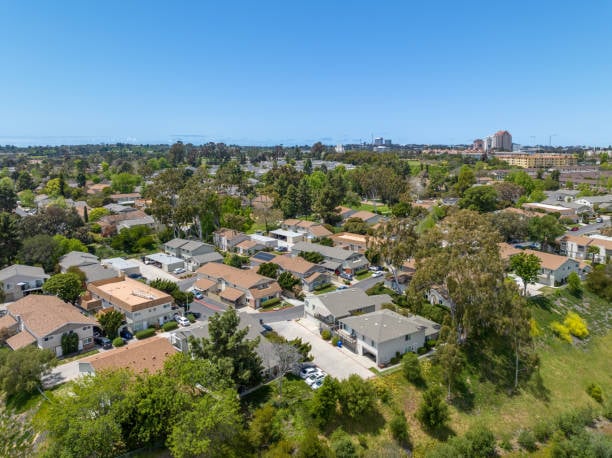
San Diego’s housing market is showing continued resilience as summer transitions into fall. Home prices remain close to record levels, demand is holding relatively steady, and properties are continuing to sell at a competitive pace. At the same time, active inventory has started to decline after several months of growth, suggesting that the market may be heading into the cooler months with fewer available homes.
While buyers have gained some breathing room compared to the more competitive conditions of previous years, the latest numbers indicate that San Diego remains a relatively strong market for sellers. Here’s a closer look at the latest trends shaping the local real estate market.
San Diego home values continue to demonstrate strength, even as prices experience a slight seasonal adjustment. In August, the median price for a single-family home reached $1,090,000, representing a 6.34% increase from the $1,025,000 median recorded during the same month last year.
Although this marked a modest 0.86% decrease from July’s $1,099,500, it is important to put that change into perspective. July's figure was the highest median price recorded in the data series, making the slight pullback relatively minor. Price adjustments during the latter part of summer are also not unusual, as buyer activity and the types of homes being sold can shift as the busy season winds down.
More importantly, San Diego has maintained a consistent pattern of year-over-year appreciation. August marked the eleventh consecutive month of annual price growth, with the median single-family home price remaining above $1 million for eight straight months.
This is a notable improvement from October 2025, when the median price dipped to $985,000. Since then, the market has recovered considerably, adding approximately $100,000 to the median in less than a year.
For buyers waiting for a significant price correction, the latest numbers suggest that San Diego home values have remained remarkably resilient. While individual properties and neighborhoods may experience different trends, the broader market continues to show steady long-term demand.
After several months of rising inventory, San Diego's housing supply finally began to turn downward in September. Active single-family listings reached 5,749, a 1.58% decrease from August's 5,841 listings. More significantly, September's inventory was also 1.49% lower than the 5,836 homes available during September 2025.
This shift is worth watching because it follows a period of gradual inventory growth throughout the summer. Active listings increased from 5,487 in May to a peak of 5,841 in August before beginning to retreat.
The year-over-year comparison also highlights how much the local supply picture has changed. In July 2025, active listings exceeded 6,200 homes, creating a larger selection for buyers. This year's summer inventory never reached those levels, and the latest decline suggests that the market is beginning its typical seasonal slowdown with fewer homes available than it had a year ago.
August's figures reinforced this trend as well. The 5,841 active listings that month were 4.90% below the 6,142 recorded in August 2025.
As the fall and winter months approach, inventory will likely continue to experience seasonal fluctuations. If the current pattern holds, San Diego could enter 2027 with a tighter supply of homes than it had at the beginning of 2026.
For buyers, fewer listings may mean less choice as the year progresses. For sellers, reduced competition could create an advantage, particularly for well-maintained homes that are priced appropriately for their neighborhood and condition.
Despite the seasonal changes in pricing and inventory, buyer activity remains relatively strong. In August, the median single-family home in San Diego went pending in just 19 days, matching July's pace and marking a substantial improvement over the 27 days recorded in August 2025.
In other words, homes are finding buyers about eight days faster than they were a year ago.
The market did experience a temporary slowdown toward the end of 2025 and early 2026. Days on market increased to 28 days in November and reached 29 days in January. However, the pace picked up again in the spring, with homes selling in as little as 14 days in May.
Since then, the timeline has gradually increased to 18 days in June and 19 days in July and August. This slight shift is consistent with normal seasonal patterns and does not necessarily indicate weakening demand.
In fact, every month from February 2026 onward recorded a faster selling pace than the corresponding month in 2025. That suggests buyers are still actively competing for desirable properties, even as the market moves beyond the peak summer season.
For sellers, this means that properly priced homes can continue to attract attention and move quickly. Buyers, meanwhile, should be prepared to act decisively when they find a property that meets their needs. Although the market may offer more opportunities for careful evaluation than in previous years, desirable homes can still move off the market in a relatively short period.
One of the most useful ways to understand local market conditions is by looking at Months of Supply Inventory (MSI). This metric estimates how long it would take to sell all currently available homes at the existing sales pace, assuming no additional listings enter the market.
Generally, around three months of inventory is considered a balanced market. When supply falls below that level, conditions tend to favor sellers. When it rises above three months, buyers typically have more negotiating power and a greater selection of homes.
As of August, San Diego had approximately 3.1 months of housing supply, placing the market near the balanced range, with a slight advantage for sellers.
This represented a 6.90% increase from July's 2.9 months, reflecting the higher inventory levels seen toward the end of summer. However, supply was still 6.06% lower than the 3.3 months recorded in August 2025.
The market has remained relatively stable throughout 2026, with MSI fluctuating between 2.7 and 3.1 months since March. This is a narrower range than the fluctuations experienced in 2025, when supply reached as high as 3.6 months in June.
With inventory beginning to decline and home prices continuing to post year-over-year gains, the latest indicators suggest that sellers retain a modest advantage as San Diego heads into fall. Still, conditions are not the same everywhere. Neighborhood, property type, condition, and pricing strategy can all influence how quickly a home sells and how much negotiating room buyers have.
San Diego's housing market continues to show a combination of steady appreciation, relatively quick sales, and gradually tightening inventory. While the market is no longer experiencing the same level of competition seen during some of its busiest periods, the latest data does not point to a major shift toward buyer-dominated conditions either.
For buyers, the market may provide opportunities to approach decisions more carefully, but waiting for a substantial drop in home values could be a risky strategy. Prices remain well above last year's levels, and available inventory is beginning to decline. Understanding local pricing trends and being financially prepared can help buyers make confident decisions when the right home becomes available.
For sellers, the combination of sustained home values and relatively limited supply is encouraging. However, buyers are still paying close attention to price, condition, and overall value. Setting a realistic asking price from the beginning and presenting a home well can make a meaningful difference in attracting serious offers.
Ultimately, San Diego remains a market where local conditions matter. A neighborhood with limited inventory may behave very differently from an area with more homes available, even within the same city.
As we move further into fall, it will be worth watching whether inventory continues to contract and whether home prices maintain their year-over-year momentum. For anyone considering buying or selling, staying informed about the trends in your specific neighborhood is one of the best ways to make a well-timed real estate decision.
Stay up to date on the latest real estate trends.


You’ve got questions and we can’t wait to answer them.